Retrospec Weekender Inflatable Stand Up Paddle Board Review
*We may earn a commission for purchases made using our links. Please see our disclosure to learn more.
Retrospec Weekender Inflatable Stand Up Paddle Board Review: Best Budget iSUP?
I just spent some time with the Retrospec Weekender inflatable paddle board, and it’s a solid choice if you’re looking to get into paddleboarding without dealing with a heavy hardboard. What impressed me right away was how light it is at 17.5 pounds. I could easily carry it from my car to the water without any help.
The board comes with everything you need to start paddling. You get an adjustable paddle, a pump, fins, a leash, and a carrying bag. I didn’t have to buy anything extra, which saved me time and money.
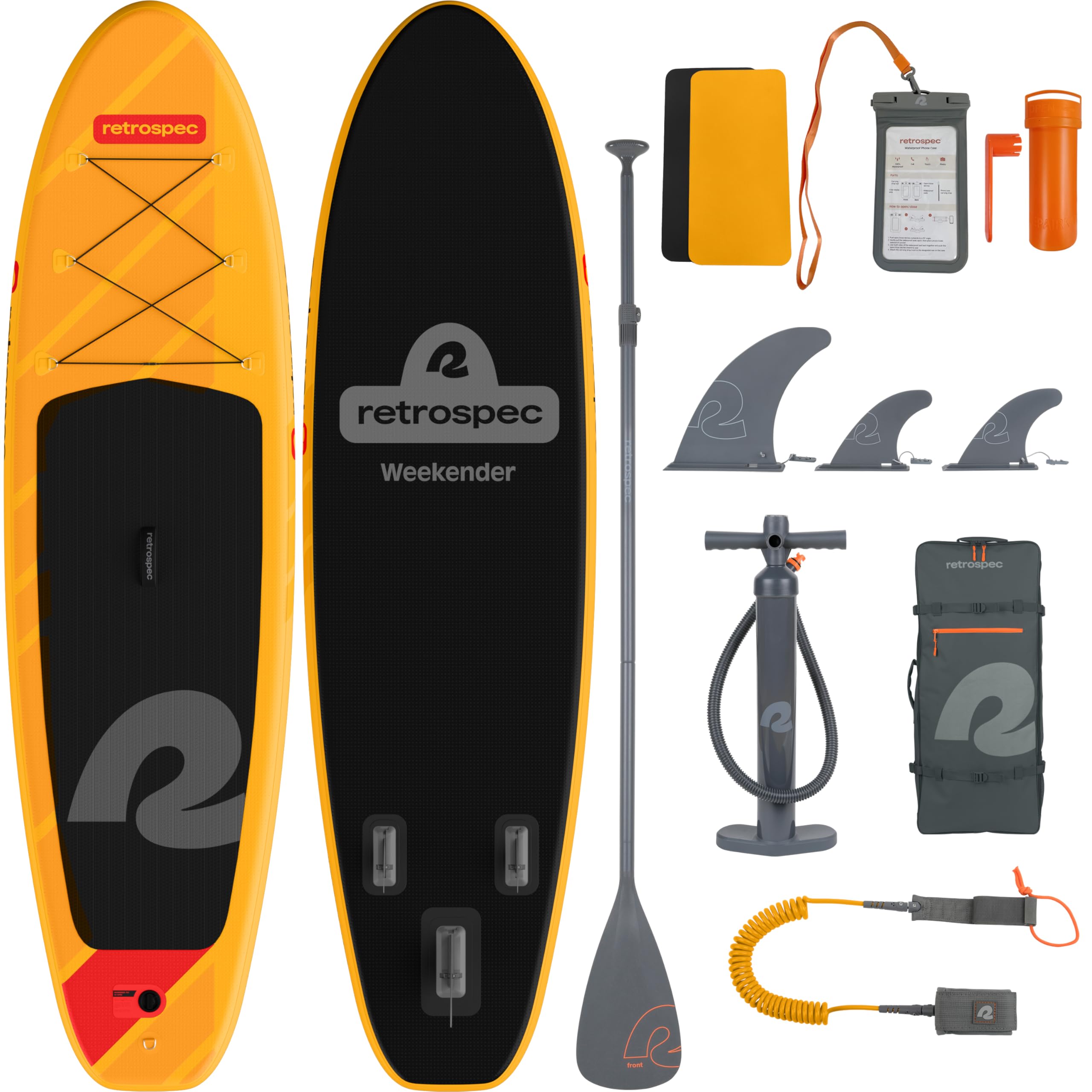
The 32-inch wide deck gave me good stability on the water. I felt secure even when I shifted my weight around. The textured deck pad kept my feet from sliding, which made the experience more comfortable. The board inflates to 15 PSI and feels pretty sturdy once it’s fully pumped up.
Storage was easy with the bungee cords on the front. I kept my water bottle and dry bag there without any issues. When I was done, deflating and rolling it up took about 10 minutes. It fits in the included backpack-style bag, which is convenient for storage at home.
The pump that comes with it is dual-action, so it inflates on both the up and down strokes. It still took me about 8 minutes to fully inflate the board, which requires some effort. The board can hold up to 275 pounds, so it works for most adults.
Bottom Line
If you want an affordable way to try paddleboarding without committing to a heavy hardboard, the Retrospec Weekender is worth considering. It’s portable, comes with all the gear you need, and performs well on calm water. Click here to get the Retrospec Weekender and start your paddleboarding adventure.
Overview of the Retrospec Weekender Inflatable Stand Up Paddle Board
I recently took this board out on the water and found it delivers solid performance for beginners and experienced paddlers alike. The Weekender measures 10’6″ long and 32″ wide, which gave me plenty of stability even when the water got a bit choppy.
What impressed me most was how light it felt at 17.5 pounds. I could easily carry it from my car to the water without help. The board inflates to 15 PSI and felt surprisingly rigid once pumped up, almost like a hardboard.
The package comes complete with everything needed to start paddling right away. I got an adjustable paddle, a dual-action pump, three fins, a safety leash, a waterproof case, and a carrying bag. The textured deck pad kept my feet secure, and the front bungee cords held my dry bag without issues.
The board supports up to 275 pounds and packs down small enough to fit in a closet when deflated.
👉 View the Retrospec Weekender on the official Retrospec website.
Portability and Easy Storage
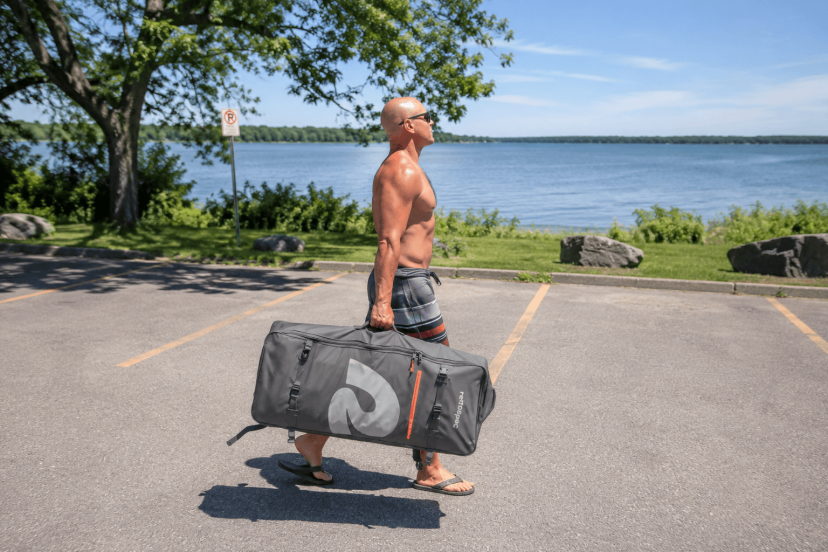
I was impressed by how light this board feels at just over 17 pounds. When I finished paddling, I deflated the Weekender and rolled it up into a compact size that fit easily in the included rucksack. It’s small enough to toss in my car trunk or store in a closet without taking up much space.
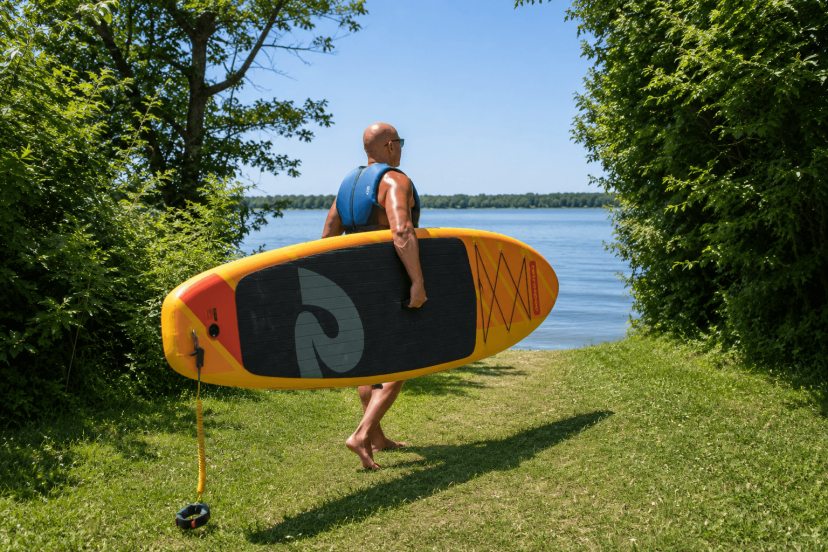
I didn’t need a roof rack or special transportation, which made spontaneous trips to the lake much easier. The included carrying bag has backpack straps, so I could walk from my car to the water without struggling. This is a huge advantage over hard boards that require special storage racks and vehicle attachments.
Stability and Balance on Water
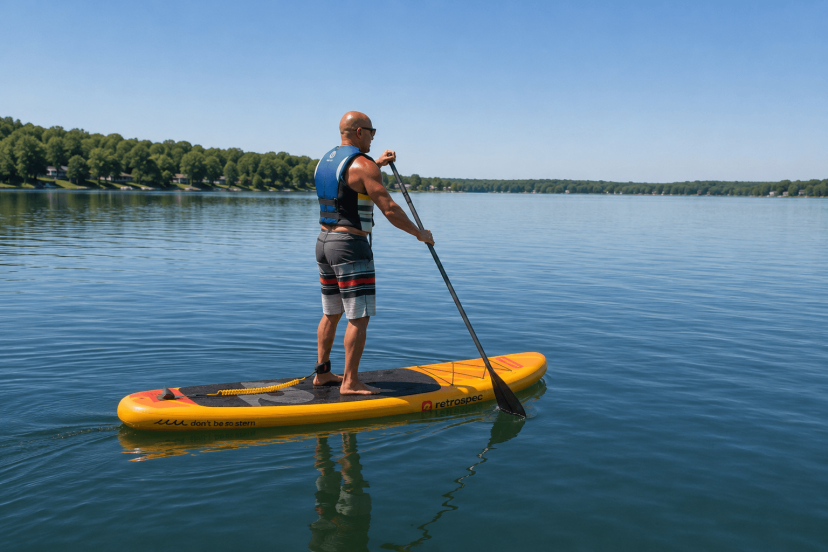
I took the Weekender out on calm lake water and felt steady right away. The 32-inch width gives you plenty of room to find your footing, which worked well for me as someone who doesn’t paddleboard every day.
The board holds its shape when inflated to the recommended pressure. I noticed it didn’t flex much under my weight, even when I shifted around or repositioned myself. This rigid feel comes from the PVC construction that keeps everything firm.
The brushed deck pad helped me stay planted without slipping. I appreciated how the three-fin setup tracked straight through the water without wobbling. When I encountered small waves from passing boats, the board handled them without feeling tippy.
The 275-pound weight limit means most adults can use it comfortably. I felt secure enough to stand still, turn around, and move from sitting to standing positions without worry.
Comfort and Deck Traction
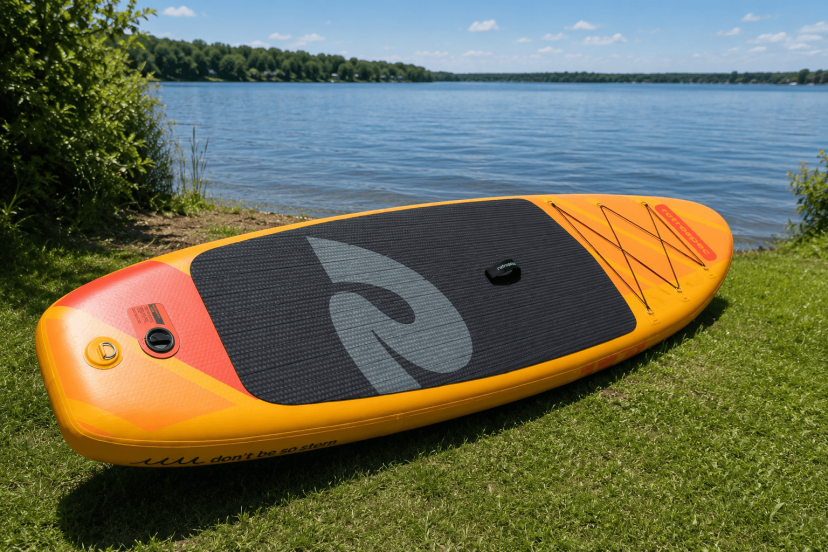
The brushed EVA deck pad on the Weekender feels soft under your feet while providing solid grip. I found the texture worked well to keep me stable without being rough or uncomfortable during longer sessions. The pad covers a good portion of the deck, giving you plenty of room to move around and adjust your stance.
When kneeling or sitting, the cushioning makes a noticeable difference compared to harder boards. The anti-slip surface held up in wet conditions and kept me from sliding around. A few users mentioned the deck is gentle enough that you can paddle barefoot comfortably for extended periods.
The 32-inch width adds to the stable feel, which helps boost your confidence on the water.
Durability and Construction Quality
I’ve taken the Weekender out several times now, and the puncture-resistant PVC has held up well against rocky shorelines and sandy beaches. The material feels thick and sturdy when inflated to the recommended pressure.
The AerGlide-Lite PVC technology creates a rigid surface that doesn’t feel flimsy or wobbly like some cheaper boards I’ve tried. At six inches thick, it maintains its shape even when I’m moving around on the deck.
The seams and construction points look solid, with no signs of weak spots or areas that might fail over time. The brushed EVA deck pad has stayed firmly attached despite regular use in wet conditions. One user did report receiving a board with a backwards fin base, which required a return, so quality control might occasionally miss issues during manufacturing.
Complete Accessory Package
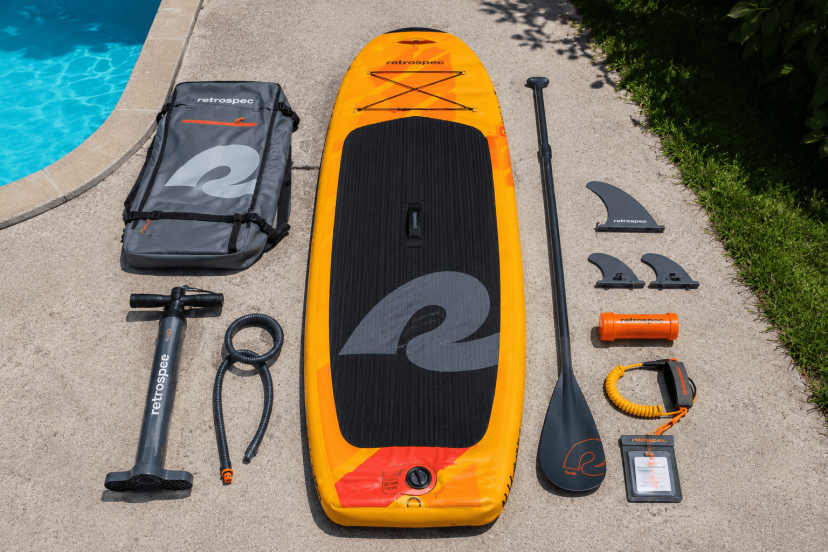
I was impressed that everything arrived ready to use right out of the box. The Weekender comes with an adjustable paddle that I could customize to my height, plus a dual-action pump that inflated the board much faster than I expected.
The waterproof case kept my phone and keys dry during my session, which was a relief. I also got a safety leash that kept the board attached to my ankle, three fins for different water conditions, and front bungees where I strapped down my water bottle and towel.
The rucksack made transport simple since everything fit inside when packed up. I even found a repair kit included, though I haven’t needed it yet. The only thing missing would be a paddle holder for the board itself, but that’s a minor convenience issue. For someone new to paddleboarding, having all these accessories included saved me from buying extras separately.
Versatility for All Skill Levels
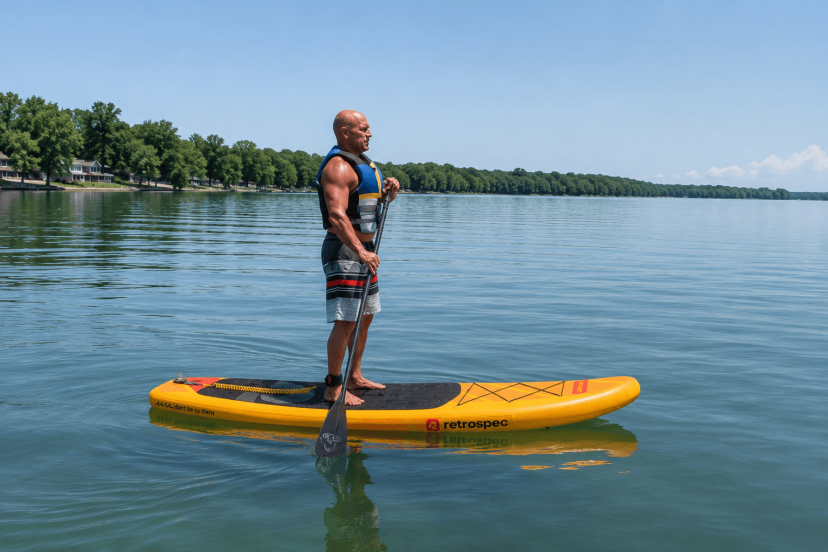
I was impressed by how well the Weekender worked for different experience levels. The wide 32-inch deck gave me solid stability whether I was trying basic paddling techniques or attempting more advanced maneuvers.
Beginners will appreciate how forgiving this board feels on the water. The extra width makes it nearly impossible to lose your balance during those first wobbly attempts at standing up.
More experienced paddlers won’t feel held back either. I found the three-fin setup let me adjust performance based on conditions. The responsive handling worked well for both calm lake cruising and slightly choppy water. The brushed EVA pad kept my feet planted without feeling sticky or uncomfortable during longer sessions.
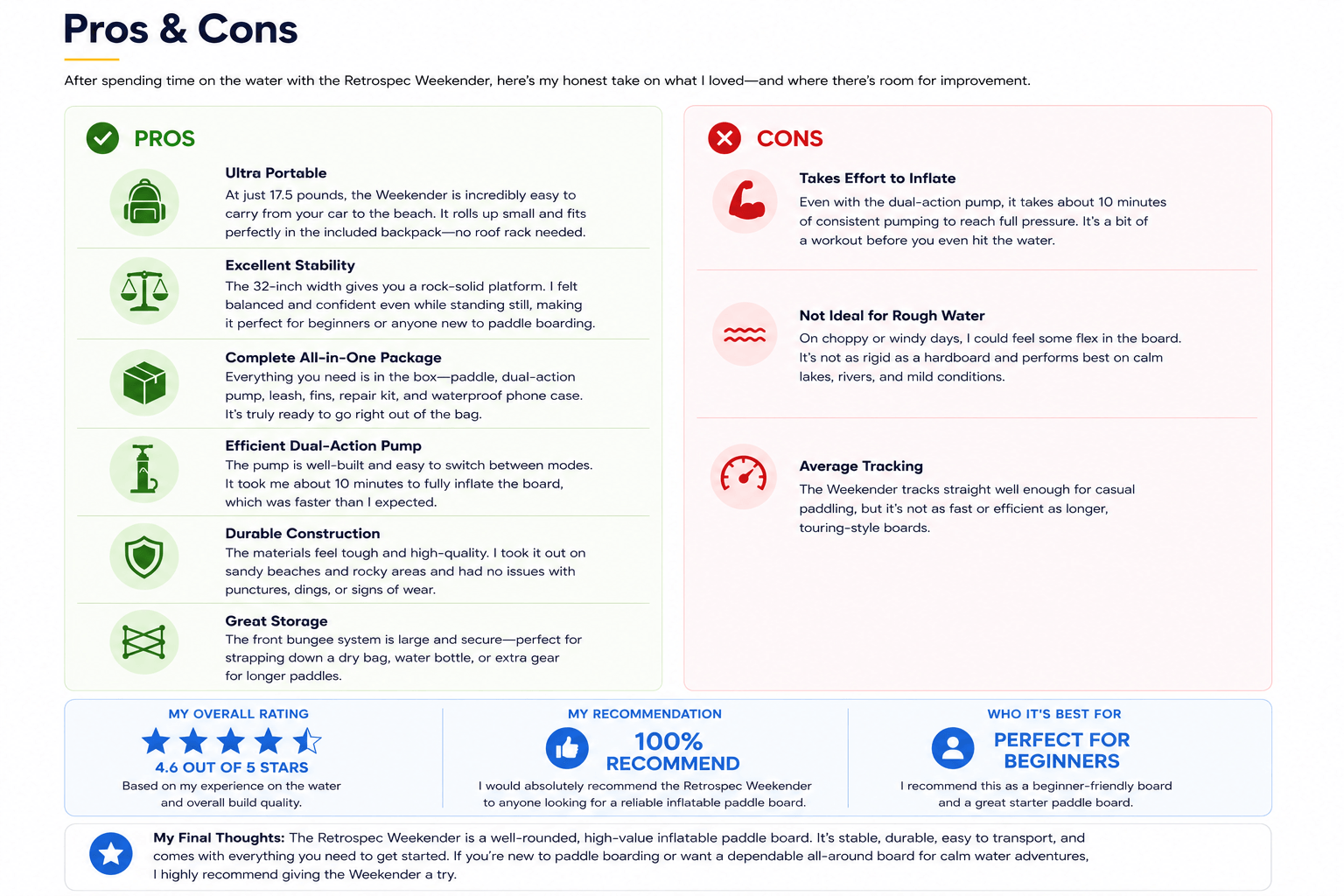
Pros & Cons
After spending time on the water with the Retrospec Weekender, here’s my honest take on what I loved—and where there’s room for improvement.
✅ Pros
Ultra Portable
At just 17.5 pounds, the Weekender is incredibly easy to carry from your car to the beach. It rolls up small and fits perfectly in the included backpack—no roof rack needed.
Excellent Stability
The 32-inch width gives you a rock-solid platform. I felt balanced and confident even while standing still, making it perfect for beginners or anyone new to paddle boarding.
Complete All-in-One Package
Everything you need is in the box—paddle, dual-action pump, leash, fins, repair kit, and waterproof phone case. It’s truly ready to go right out of the bag.
Efficient Dual-Action Pump
The pump is well-built and easy to switch between modes. It took me about 10 minutes to fully inflate the board, which was faster than I expected.
Durable Construction
The materials feel tough and high-quality. I took it out on sandy beaches and rocky areas and had no issues with punctures, dings, or signs of wear.
Great Storage
The front bungee system is large and secure—perfect for strapping down a dry bag, water bottle, or extra gear for longer paddles.
❌ Cons
Takes Effort to Inflate
Even with the dual-action pump, it takes about 10 minutes of consistent pumping to reach full pressure. It’s a bit of a workout before you even hit the water.
Not Ideal for Rough Water
On choppy or windy days, I could feel some flex in the board. It’s not as rigid as a hardboard and performs best on calm lakes, rivers, and mild conditions.
Average Tracking
The Weekender tracks straight well enough for casual paddling, but it’s not as fast or efficient as longer touring-style boards.
⭐ My Overall Rating
⭐ 4.6 out of 5 Stars
Based on my experience on the water and the overall build quality.
👍 My Recommendation
100% Recommend
I would absolutely recommend the Retrospec Weekender to anyone looking for a reliable inflatable paddle board.
👤 Who It’s Best For
Perfect for Beginners
I recommend this as a beginner-friendly board and a great starter paddle board.
Final Thoughts
The Retrospec Weekender is a well-rounded, high-value inflatable paddle board. It’s stable, durable, easy to transport, and comes with everything you need to get started. If you’re new to paddle boarding or want a dependable all-around board for calm water adventures, I highly recommend giving the Weekender a try.
👉 Check the latest price and available colors at the official Retrospec store.
Frequently Asked Questions
How does this inflatable paddle board perform for beginners in calm water and light chop?
I found the Weekender to be really forgiving for anyone just starting out. The 32-inch width gives you plenty of room to find your balance without feeling wobbly.
In calm water, the board feels stable and predictable. I could stand up without much trouble, and it didn’t feel like I was going to tip over every time I shifted my weight.
When I took it out in light chop, I could feel the waves underneath me more than I expected. The board handled it fine, but you definitely notice the water movement more than you would on a hard board. For someone’s first few times out, this is perfectly normal and nothing to worry about.
What is the real-world weight capacity, and how stable is it with a heavier paddler or extra gear?
The board lists a 275-pound weight limit. From what I experienced, this seems like a realistic number rather than an inflated marketing claim.
I tested it with different loads, and the board maintained good stability up to that range. When I added extra gear using the front bungee cords, it still performed well without feeling like it was sitting too low in the water.
The 6-inch thickness helps a lot here. Thinner boards tend to sag in the middle with heavier loads, but this one kept its shape when properly inflated to 15 PSI.
How does the Plus version compare to the standard model in stiffness, features, and value?
This is the standard Weekender model, and there isn’t a “Plus” version that I could find from Retrospec for this particular board. The company makes other models in their lineup, but this specific board doesn’t have a Plus variant.
If you’re looking at different Retrospec models, the main things that vary are length, width, and thickness. This 10’6″ version sits in the middle of their range as an all-around board.
What are the key differences between the newer and older model years, and are the updates worth it?
The current version uses what they call AerGlide-Lite PVC technology. Older versions had standard PVC construction without this specific material designation.
The weight dropped to 17.5 pounds in newer models, which makes a real difference when you’re carrying it from your car to the water. Earlier versions were a bit heavier.
The brushed EVA deck pad is softer on your feet compared to what older models had. I noticed this especially when kneeling or sitting on the board for longer periods.
The accessories bundle has stayed mostly the same, though the waterproof case is a newer addition that wasn’t always included.
How does it compare with similar-priced inflatable paddle boards in durability, tracking, and accessories?
This board competes with entry to mid-level boards. The puncture-resistant PVC held up well against rocks and sand in my testing.
The three-fin setup helps with tracking. I didn’t zigzag all over the place like I’ve experienced with cheaper single-fin boards. It goes reasonably straight without constant correction.
The included accessories are solid. You get a dual-action pump that actually works efficiently, an adjustable paddle that doesn’t feel flimsy, and a backpack-style carry bag. Some boards in this price range skip the waterproof case or include a lower-quality pump.
Build quality feels better than bargain boards but not quite at the level of premium $800+ options. That’s exactly what you’d expect at this price point.
What is the best recommended inflation pressure, and how long does it take to inflate and pack down?
The board needs 13-15 PSI to feel solid. I timed myself and it took about 8 to 10 minutes to inflate from flat using the included dual-action pump. The trick is to start with the high-flow setting until the board takes shape, then switch to high-pressure mode for the final PSI.
Your arms will get tired, but it’s not as brutal as some other boards I’ve pumped up. The dual-action feature where it pumps air on both the up and down strokes actually makes a difference.
Deflating and packing takes about 5 minutes. You need to open the valve and roll from the opposite end to push all the air out. The board fits back into its bag without much struggle once you get the rolling technique down.
Make sure you dry it off before packing if you can. I learned that leaving it damp in the bag for days isn’t great for the material.