Paddleboard Techniques For Choppy Water
*We may earn a commission for purchases made using our links. Please see our disclosure to learn more.
Paddleboard Techniques for Choppy Water: Mastering Rough Conditions
Master these paddleboard techniques for choppy water with this guide! Choppy water turns a peaceful paddle into a real test of skill and balance. When wind picks up or boat wakes roll through, your board feels less stable and staying on course becomes harder. The key to paddling in choppy conditions is adjusting your stance to a slight offset position, shortening your strokes while increasing cadence, and using your paddle as a balance tool rather than just for forward motion.

I’ve learned that proper paddleboard techniques for choppy water require both physical adjustments and mental preparation. Your board choice matters, your stance needs to shift from what works on calm water, and your stroke pattern must change completely. Small waves demand quick reactions and steady focus.
This guide covers everything from choosing the right equipment and mastering stability techniques to reading wind angles and knowing when conditions exceed your skill level. Whether you’re dealing with light chop or more serious rough water, understanding how to navigate through choppy waters will help you paddle with confidence instead of fear.
Understanding Choppy Waters and Their Challenges
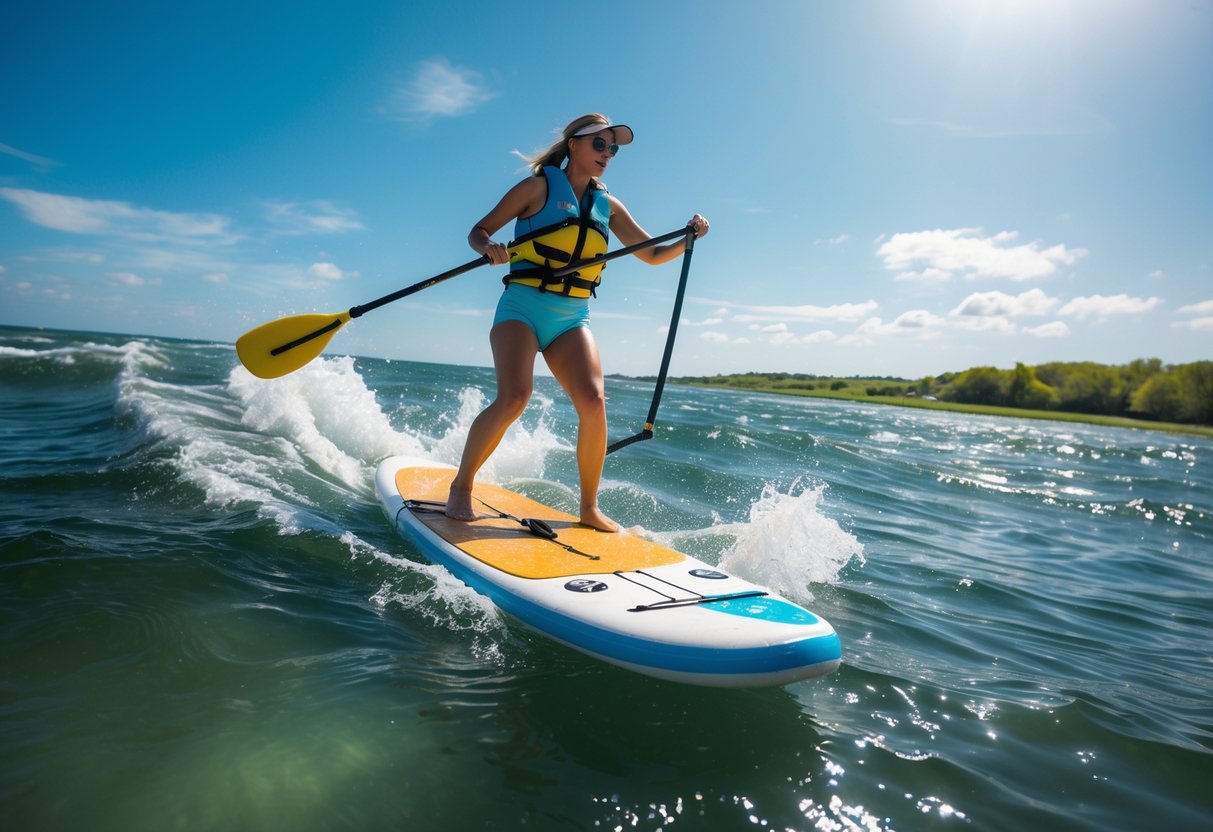
Choppy waters form when wind, currents, and wave patterns combine to create short, steep waves that can throw off your balance and disrupt your paddling rhythm. Wind direction determines whether you’ll face head-on resistance or get pushed from the side, while different types of water movement require specific adjustments to your technique.
Defining Choppy and Rough Water Conditions
Choppy water refers to short, irregular waves that stack close together and create an uneven surface. These conditions happen when wind blows across a body of water and creates friction on the surface.
The main difference between choppy and rough water is wave height and pattern. Choppy conditions typically feature waves under 2 feet that come from multiple directions. Rough waters include larger waves, often 3 feet or higher, with more power behind them.
I find that choppy water conditions can pose a challenge because they’re unpredictable. One moment the surface might be manageable, and the next you’re dealing with several small waves hitting your board from different angles. Boat wakes add another layer of difficulty by creating sudden wave patterns that cross existing chop.
Water temperature and fetch also play a role. Fetch is the distance wind travels across water before reaching you. Longer fetch means bigger, more organized waves.
Types of Water Movement: Chop, Swell, and Breaking Waves
Chop consists of small, sharp waves created by local wind conditions. These waves have short periods between crests and don’t follow a consistent pattern.
Swell forms from distant weather systems and travels long distances. Swell waves are more organized with longer periods between peaks, making them easier to predict and ride. The waves roll under your board in a rhythm you can anticipate.
Breaking waves occur when wave energy meets shallow water or obstacles. The wave crest topples forward, releasing energy quickly. White caps are small breaking waves that form in open water during strong winds.
Each type requires different responses. Chop demands quick balance adjustments and higher paddling cadence. Swell lets you time your strokes with wave patterns. Breaking waves need careful navigation to avoid getting knocked off your board.
How Currents and Wind Direction Affect Paddleboarding
Wind direction shapes every aspect of paddling in choppy conditions. Headwinds force you to work harder and maintain higher stroke rates. Tailwinds push you forward but can cause instability as waves catch your board from behind.
Cross-winds create the trickiest conditions. They push sideways on your body while waves hit your board from the side. I need to angle slightly into cross-winds rather than fighting them directly.
Currents add another force to manage. When wind opposes current direction, it stacks shorter and steeper waves that are harder to navigate. Wind with current creates longer, more gradual waves.
Understanding how wind and currents interact helps you plan smarter routes. Going upwind first means you’ll have assistance on the return trip when you’re more tired. Avoiding areas where wind pushes toward hazards keeps you safer.
Essential Paddleboard Techniques for Choppy Water
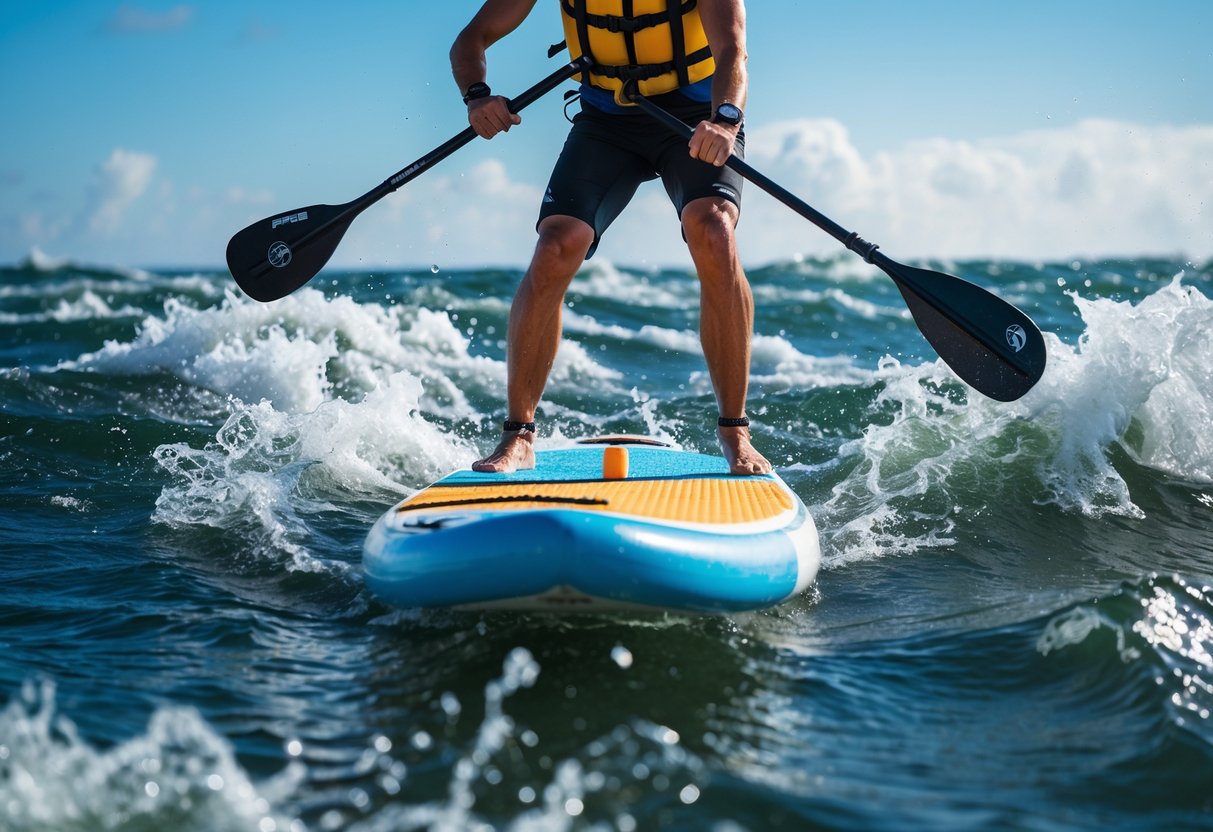
Mastering choppy water requires adjustments to your stance, paddle technique, and how you use your body weight. Your success depends on keeping your knees bent, engaging your core, and adapting your stroke pattern to match the water conditions.
Proper Stance and Body Positioning
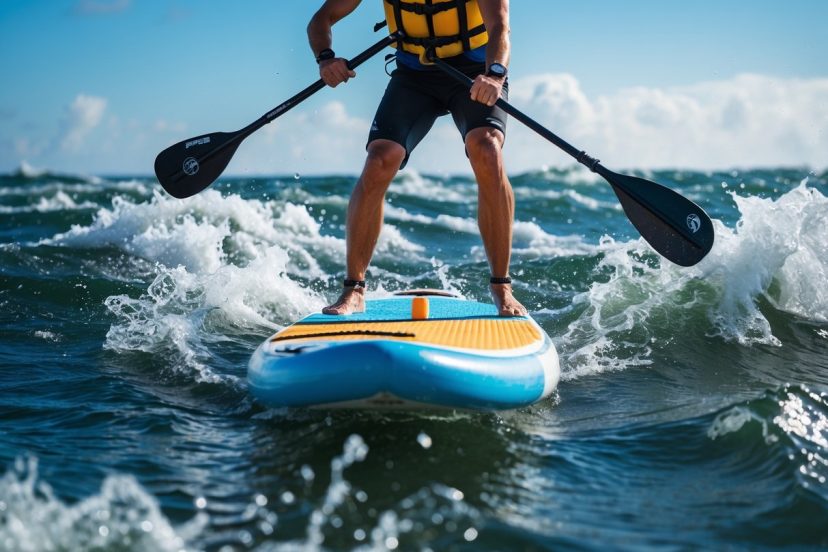
I keep my feet wider than shoulder-width apart when paddling through choppy conditions. This broader base gives me more stability as waves hit the board from different angles.
My knees stay bent throughout the entire session. Stiff legs make it nearly impossible to absorb the constant movement of the water beneath me. When I bend my knees, I create natural shock absorbers that help me stay balanced when unexpected waves arrive.
I position my feet parallel to each other, centered on the board’s carry handle area. This central positioning keeps my weight distributed evenly. If I stand too far forward or back, the board becomes harder to control in rough water.
My body weight stays low and centered over the board. I lean slightly forward from my hips rather than bending at my waist. This forward lean helps me stay stable and ready to react to changing conditions.
Effective Paddle Stroke in Rough Conditions
I increase my paddle cadence in choppy water compared to calm conditions. Quick, short strokes work better than long, powerful strokes when navigating through waves and wind chop.
My paddle enters the water closer to the board than usual. This narrow stroke path gives me better control and helps me make quick corrections. I keep the paddle shaft more vertical to generate forward momentum efficiently.
I switch sides more frequently than I would on flat water. Rather than taking 4-5 strokes per side, I often take just 2-3 strokes before switching. This frequent switching helps me maintain a straight course when wind and waves push the board around.
When waves approach, I use defensive strokes like the slap brace. I quickly slap my paddle flat against the water surface when a sudden wave threatens my balance. This technique provides instant stability without requiring perfect timing.
Utilizing Core Strength and Maintaining Balance
My core muscles do most of the work in choppy conditions. I engage my abs and lower back constantly to maintain stability. When I rely only on my arms and legs, I tire quickly and lose control.
I rotate my torso with each paddle stroke rather than just moving my arms. This rotation generates more power while keeping my body weight centered. My shoulders, hips, and core all move together as one unit.
I make small, continuous adjustments with my feet and ankles. These micro-movements help me respond to the board’s constant motion beneath me. My legs stay active and engaged rather than locked in position.
When I feel myself losing balance, I lower my center of gravity immediately. I can drop to my knees without hesitation if conditions exceed my abilities. Kneeling provides a stable alternative that lets me keep moving forward safely rather than falling in.
Advanced Strategies for Challenging Conditions
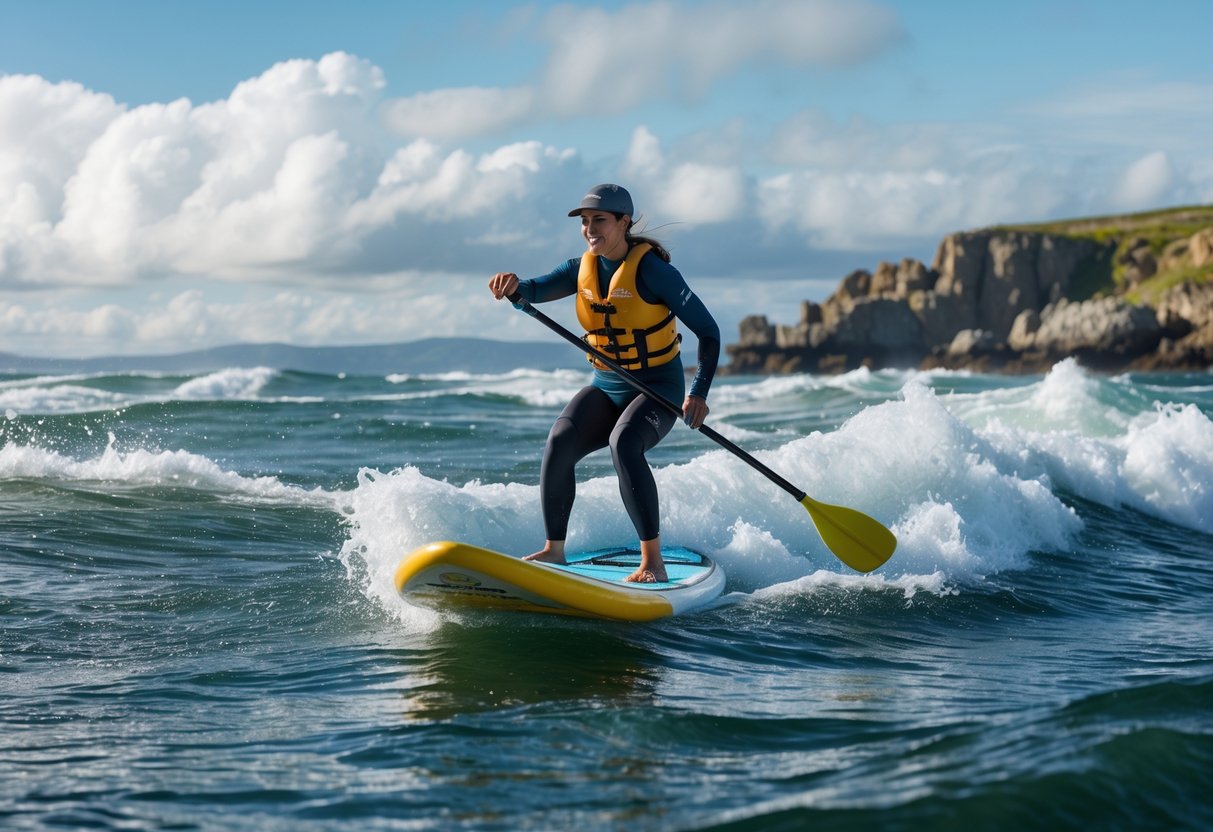
When conditions get rough, basic paddling skills won’t be enough. I focus on specific bracing moves, reading how wind and current interact, and adapting my body position moment by moment to stay in control.
Bracing and Stability Techniques
I use the low brace as my primary recovery tool in choppy water. When a wave hits from the side, I quickly slap my paddle blade flat on the water surface with my knuckles facing down. This creates instant support that lets me push down and shift my weight back over the board center.
The high brace works when I’m already leaning too far and need more aggressive support. I plant the paddle with my knuckles up and the power face down, then pull myself back to vertical. I keep my elbows below shoulder height to protect my joints.
Key bracing principles I follow:
- Keep my blade angle flat (not vertical) during braces
- Apply quick, light pressure rather than heavy weight
- Return to my paddle stroke immediately after each brace
- Practice brace taps between regular strokes to build muscle memory
I widen my stance slightly when conditions deteriorate, moving from hip-width to shoulder-width. My knees stay soft and bent, acting like shock absorbers that let the board move under me while my upper body stays stable.
Navigating Strong Currents and Changing Winds
I always identify wind direction before launching because it determines my entire route strategy. When wind and current oppose each other, they create the steepest, most difficult waves I’ll face on a SUP.
My approach changes based on what I’m fighting:
Upwind paddling: I increase my stroke rate to 50-55 strokes per minute and shorten each stroke. I step back 2-3 inches to keep my nose from slapping down into wave faces. My GPS speed drops, but I measure success by maintaining steady cadence rather than distance covered.
Downwind runs: I shift my weight slightly back as I catch each wave face. I exit my stroke early—around my feet—to prevent burying the nose as I accelerate. Small step-backs help me link bumps together without pearling.
Cross-wind conditions: I angle my board 5-15 degrees into the wind rather than fighting to stay perfectly perpendicular. This lets me work with strong currents instead of against them. I load my inside rail gently and use small draw strokes to maintain my line.
I plan every route to paddle upwind first. This ensures my return leg has assistance, and I’m not exhausted when conditions are helping me.
Adjusting to Unpredictable Water Movement
I read the water constantly and make micro-adjustments every few seconds. When I see a larger set approaching, I widen my stance before the first wave hits rather than reacting after I’m already off-balance.
My trim position changes based on what the board is doing. If my nose keeps slapping, I step back one foot-length. If my tail feels sticky and slow, I move forward slightly. I’m looking for what paddlers call “quiet water”—minimal splash and spray as the board releases from each wave.
I keep my eyes on the horizon, not down at my feet or the water right in front of me. Looking down makes me wobble more and prevents me from seeing the next set of waves coming. My peripheral vision picks up immediate obstacles while my main focus stays forward.
When unpredictable water movement throws off my rhythm, I plant my paddle blade in the water before moving my feet. This creates a temporary third point of contact that stabilizes me during the transition. I also increase my stroke rate during confused water because faster cadence naturally stabilizes the hull, similar to how a moving bicycle is easier to balance than a stationary one.
Safety Measures and Essential Gear
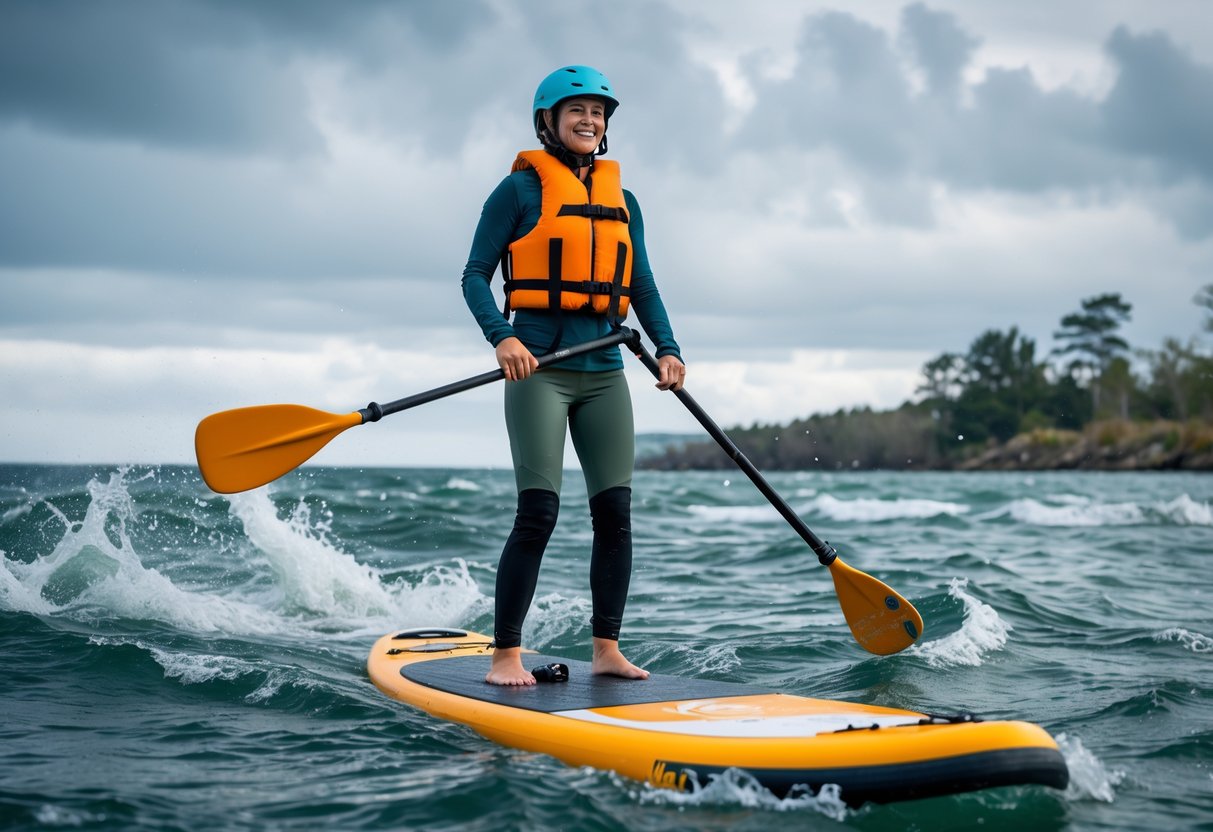
Choppy water demands specific equipment choices and preparation to keep you safe. The right board setup, proper flotation devices, and pre-launch checks make the difference between a challenging session and a dangerous one.
Choosing the Right Paddleboard for Choppy Water
I recommend looking at board dimensions carefully when you plan to paddle in rough conditions. Length between 12’6″ and 14′ gives you better tracking through waves, while width between 28 and 32 inches provides stability without sacrificing too much speed.
Solid boards give you instant feedback and work well with displacement noses that cut through chop. Inflatable boards can handle choppy water if you inflate them to the manufacturer’s recommended PSI, usually 15 to 20 PSI. Under-inflated boards flex too much and feel unstable.
Your fin setup matters just as much as the board itself. A medium, raked touring fin helps with tracking and reduces side-to-side movement in cross-chop. I slide the fin slightly aft for better tracking in side winds or move it forward when I need quicker turns in tight spaces.
Importance of Life Jacket and Leash
I always wear a USCG-approved life jacket when I paddle in choppy conditions. Your life jacket keeps you afloat if you fall and get separated from your board in rough water.
The right leash depends on where you paddle. I use a coiled leash for open water and flat-water conditions with chop from wind or boat wake. In surf zones, a straight leash works better. Never use a standard ankle leash in rivers or current—only a quick-release belt leash prevents entanglement hazards.
I also carry a whistle attached to my life jacket and keep my phone in a waterproof case. If I’m paddling near dawn or dusk, I bring a white light for visibility.
Preparation Before Entering Rough Waters
I check the weather forecast before every session, paying attention to wind speed, wind direction, gust spreads, and any marine advisories. Water temperature matters too—I dress for immersion, not air temperature.
My pre-launch equipment check includes:
- Fin: Tightened and secure in the fin box
- Leash: Swivel moves freely without tangles
- Paddle: Clamp or adjustment system is snug
- Inflation: iSUP at proper PSI
- Deck pad: Clean and grippy
I plan my route to go upwind first so I return with the wind helping me. I identify one or two bail-out points along the shore where I can safely exit if conditions worsen. I share my route and expected return time with someone on land, especially when I’m paddle boarding in choppy waters alone.
Building Skills and Confidence in Rough Waters
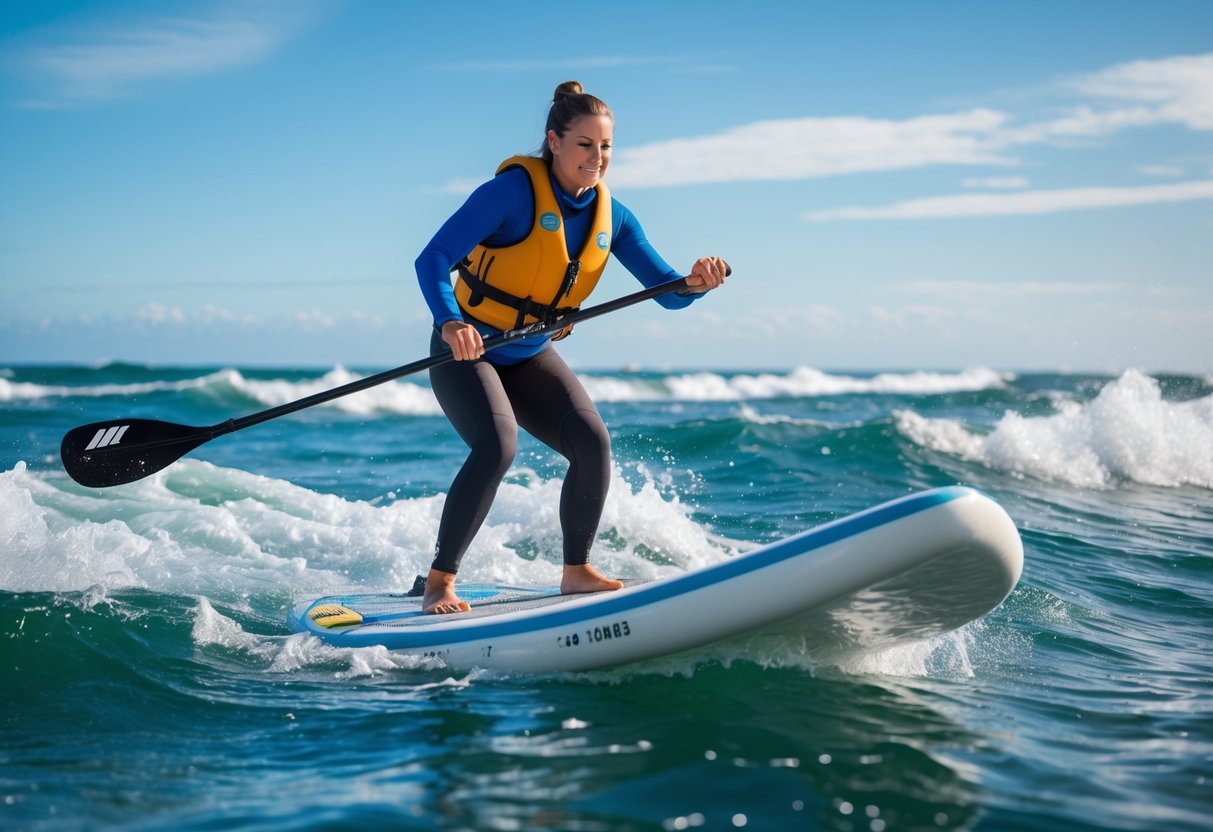
Mastering choppy water requires a step-by-step approach that starts with basic drills and builds toward handling bigger waves. I focus on specific balance exercises, proper stroke patterns, and learning to read water conditions while avoiding the common errors that leave paddleboarders struggling in rough conditions.
Progressive Skill Development
I always start in mild chop before moving to rougher water. Begin by paddling on days with small waves under 1 foot and light wind around 5-10 mph.
Practice your offset stance and cadence drills in these easier conditions first. Spend 3-4 sessions getting comfortable with the basics.
Once you can maintain balance and forward motion consistently, I add one new challenge at a time. Try slightly bigger waves one session, then crosswind conditions the next. This gradual progression prevents you from getting overwhelmed.
Track your sessions in a simple log. Note the wind speed, wave height, and how you felt. This helps you see your progress and know when you’re ready for the next step.
I recommend spending at least 8-10 hours practicing SUP skills in mild chop before attempting truly rough water. Your muscle memory needs time to adapt to the constant adjustments.
Training Drills for Balance and Control
I practice specific drills that build the exact skills needed for choppy water. These exercises develop better balance and board control fast.
Core Balance Drills:
- Cadence ladders: Paddle 2 minutes at a comfortable pace, then 1 minute at 5 strokes per minute faster. Repeat this 5 times.
- Brace taps: After every 10 normal strokes, do 3 quick low-brace taps on each side while keeping your balance.
- Offset holds: Stay in your offset stance for 3-5 minutes in side chop, using only small correction strokes.
I also practice step-back recoveries regularly. Plant your blade firmly, step back 2-3 inches, make a small pivot, then return to your neutral position. Do this every 50-100 yards during a training paddle.
Controlled falling practice helps too. In shallow water near shore, I intentionally put myself off-balance and practice recovery techniques. This removes the fear of falling when real waves hit.
Common Mistakes to Avoid in Choppy Conditions
The biggest mistake I see paddleboarders make is looking down at the water instead of keeping their eyes on the horizon. This immediately affects your balance and makes you wobble more.
Another major error is taking long, powerful strokes past your feet. In rough water paddleboarding, these extended strokes cause the board to yaw side to side. Keep your exit point around your feet.
Many paddleboarders also stand too rigid with locked knees. I keep my knees soft and bent to absorb the constant bumps. Think of your legs as shock absorbers.
Paddling too close to shore when wind pushes you toward rocks or docks creates dangerous situations. I always go upwind first so the return trip is easier and safer.
Finally, using an under-inflated board is a common setup mistake. Check your PSI before every session. Low pressure makes the board flex too much and feel unstable in waves.
Frequently Asked Questions
Paddlers often ask about specific adjustments to stance, stroke technique, and safety gear when conditions get rough. The answers focus on keeping your knees soft, shortening your paddle strokes, and always wearing proper flotation.
What are the best techniques for maintaining balance on a paddleboard in rough conditions?
I keep my knees slightly bent to absorb the motion of the waves. This soft-knee position acts like suspension and helps me stay planted on the board.
I also widen my stance to about hip or shoulder width. My feet straddle the carry handle, which gives me a stable base.
Looking at the horizon instead of down at my feet makes a huge difference. When I watch the water right below me, I tend to wobble more.
I use my paddle as a third point of contact. Quick low braces—where I skim the blade flat on the water—help me recover when a wave knocks me off balance.
How should one modify their stance on a paddleboard when facing choppy waters?
I shift from a neutral stance to a slight offset position in side chop. My front foot moves about half a foot length forward of my rear foot.
This offset stance widens my fore-aft base without going into a full surf stance. It gives me better control when waves hit from the side.
I keep my hips stacked over my heels rather than bending at the waist. Steering with my hips instead of my upper body keeps me more stable.
If my nose keeps slapping the water, I step back an inch or two. If the tail feels sluggish, I move forward slightly to free it up.
What type of paddle stroke is most effective for navigating through choppy water on a SUP?
I shorten my stroke and increase my cadence when the water gets rough. Instead of long, powerful strokes, I take quicker, cleaner strokes.
I plant the paddle early near my toes with a vertical shaft. Then I exit the stroke around my feet instead of pulling all the way back to my heels.
Pulling past my heels causes the board to yaw when waves bump me around. The early exit keeps my line straighter.
I aim for about 40 to 55 strokes per minute, which is faster than my calm-water pace. This higher cadence stabilizes the hull like a bike moving at speed.
Are there safety precautions to consider when paddleboarding in challenging water conditions?
I always wear a USCG-approved life jacket when conditions are rough. A PFD can save my life if I fall far from shore.
I use a coiled leash for open water and flat conditions. In surf zones, I switch to a straight leash, and near rivers with current, I only use a quick-release belt leash.
I dress for the water temperature, not the air temperature. If the water is cold, I wear a wetsuit or drysuit to prevent hypothermia.
I carry a phone in a waterproof case and attach a whistle to my PFD. Before I launch, I share my route and expected return time with someone on shore.
How can one quickly adjust their direction while paddleboarding in choppy water?
I use small correction strokes instead of giant sweeps. Tiny draws on the inside rail keep me on course without destabilizing my balance.
When I need to turn more sharply, I plant my blade firmly before I shift my weight. This anchored paddle gives me a stable point to pivot around.
I also apply light pressure with my inside foot to engage the rail slightly. This subtle weight shift helps the board carve without requiring big stroke adjustments.
Mini-sweeps work well for gradual course changes. I keep these sweeps short and quiet rather than dramatic.
What are the key differences in paddleboarding strategy between calm and choppy waters?
In calm water, I can use longer, more powerful strokes with a slower cadence. My stance stays neutral and my trim point doesn’t change much.
When paddling through choppy conditions, I shift to shorter strokes and faster rhythm. My stance moves to a slight offset, and I constantly adjust my fore-aft position based on wave direction.
I also change my route planning. Instead of exploring freely, I paddle upwind first so I return with the wind’s help.
My blade work becomes more active in chop. I use low braces and correction strokes constantly, whereas in calm water I barely need them.